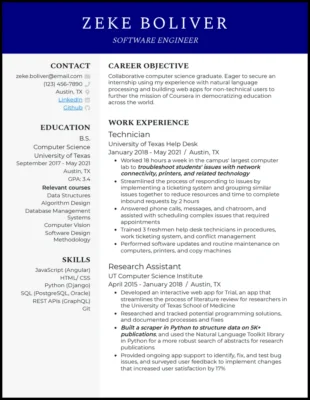
How to Prepare a Good CV for ICT Internship Applications. In Uganda’s growing technology industry, competition for the best ICT internship placements is intensifying every year. Thousands of computer science, software engineering, information technology, and data science students graduate from universities and technical institutions across the country annually — and every single one of them is competing for a limited number of quality internship positions at reputable ICT companies. In this environment, the difference between landing your dream internship and being passed over entirely often comes down to one document — your CV.
Your Curriculum Vitae is not simply a list of schools you attended and certificates you earned. It is your professional story, your personal pitch, and your first opportunity to demonstrate to a potential employer that you are worth their time, their mentorship, and their investment. A strong ICT internship CV communicates your technical skills, your academic background, your practical experience, your personality, and your potential — all within a single, well-structured, easy-to-read document.
At Kenlink Technologies, Uganda’s number one ICT company and one of Kampala’s most respected IT internship destinations, we review hundreds of applications from aspiring tech professionals every year. This guide shares exactly what we look for — and what most applicants get wrong.
1. Start With a Clean, Professional Format
Before a recruiter reads a single word of your CV, they see its layout. A cluttered, poorly formatted, or visually overwhelming CV signals disorganisation and lack of attention to detail — qualities that are particularly damaging in a technology field where precision and clarity matter enormously.
Your CV should be clean, well-structured, and easy to scan in under 30 seconds. Use a professional font such as Calibri, Arial, or Times New Roman in a readable size between 10 and 12 points. Use clear section headings to organise your content. Maintain consistent spacing and alignment throughout. Keep the entire document to a maximum of two pages — one page is ideal for students and recent graduates with limited work experience.
Avoid excessive colours, decorative borders, multiple font styles, and large photographs that take up valuable space without adding professional value. Your CV should look like a document prepared by someone who understands design principles and respects the reader’s time — which is precisely the kind of thinking that Kenlink Technologies applies to every digital solution we build for our clients.
2. Write a Compelling Personal Statement
The personal statement — also called a professional summary or career objective — sits at the top of your CV, immediately below your name and contact details. It is a short paragraph of three to five sentences that tells the recruiter who you are, what you are studying or have studied, what technical skills you bring, and what you are hoping to gain from the internship.
A weak personal statement says something generic like: “I am a hardworking student seeking an internship to gain experience.” This tells a recruiter nothing useful and is immediately forgettable. A strong personal statement is specific, confident, and tailored to the company you are applying to. For example: “Final-year Bachelor of Science in Computer Science student at Makerere University with demonstrated skills in web development, Python programming, and database management. Completed three independent web projects and seeking a structured internship at a professional ICT company to apply and deepen my technical skills in a real client environment.”
The difference is night and day. Specificity, confidence, and relevance are the three qualities every strong personal statement must have.
3. Showcase Your Technical Skills Clearly
For an ICT internship application, your technical skills section is one of the most important parts of your entire CV. Recruiters at technology companies scan this section first to determine whether you have the foundational knowledge required to contribute meaningfully to their work.
Organise your technical skills clearly and honestly. List the programming languages you know — Python, JavaScript, PHP, Java, C++, or others — alongside your proficiency level for each. Include web development technologies such as HTML, CSS, React, or WordPress. Mention database systems you have worked with, such as MySQL, PostgreSQL, or MongoDB. If you have experience with version control tools like Git and GitHub, include them. Any exposure to cybersecurity tools, cloud platforms, networking concepts, or digital marketing tools is also worth listing.
Honesty is critical here. Never claim proficiency in a technology you cannot demonstrate under questioning. Experienced ICT professionals can identify exaggerated skill claims within minutes of a technical conversation, and misrepresentation damages your credibility irreparably. The National Information Technology Authority of Uganda (NITA-U) consistently emphasises the importance of verifiable, practical ICT competencies as Uganda’s digital economy matures — so focus on building and honestly representing genuine skills.
4. Include a Portfolio — Even a Small One
This is the section that separates good ICT internship applications from outstanding ones. A portfolio is a collection of projects you have actually built — websites, applications, scripts, databases, design mockups, or any other tangible evidence of your technical ability. For an ICT company reviewing your application, seeing something you have built is infinitely more convincing than reading a list of skills you claim to possess.
Your portfolio does not need to be impressive by industry standards. It needs to be real, functional, and clearly explained. A personal website you built from scratch, a small inventory management system developed as a university project, a GitHub profile showing active code contributions, or even a well-designed mockup completed during your studies — all of these demonstrate initiative, practical ability, and genuine interest in technology.
Include links to your GitHub profile, your personal website, or any live projects you have contributed to. If your work is not yet online, describe each project briefly — what problem it solved, what technologies you used, and what you learned from building it. At Kenlink Technologies, we actively encourage all internship applicants to present portfolio work, however modest, because it tells us more about a candidate’s potential than any academic certificate alone.
5. List Your Education Clearly and Accurately
Your education section should present your academic background in reverse chronological order — most recent qualification first. Include the name of the institution, the qualification you are studying for or have completed, your area of study, the years of attendance, and any notable academic achievements such as distinctions, awards, or high grades in relevant subjects.
For ICT internship applications in Uganda, qualifications from recognised institutions carry particular weight. Students and graduates of Makerere University, Kyambogo University, Uganda Martyrs University, Nkumba University, and other accredited institutions should present their credentials clearly and accurately. If you have completed any additional certifications — such as Google’s free digital skills programmes through Google Digital Garage, Cisco Networking Academy courses, or Microsoft certifications — include these in a separate certifications section immediately below your formal education.
Online certifications from platforms recognised by the global ICT community demonstrate self-motivation and a commitment to continuous learning — qualities that every good technology employer values deeply.
6. Include Relevant Experience — Even If It Is Not Traditional Employment
Many students applying for their first ICT internship worry that they have no work experience to list. This is rarely entirely true. Experience does not have to mean formal paid employment. Relevant experience for an ICT internship CV can include university group projects where you played a leadership or technical role, freelance websites or applications you built for friends, family businesses, or community organisations, volunteer work involving technology, contributions to open-source projects, participation in hackathons or coding competitions, or leadership roles in technology clubs and societies at your institution.
Each of these experiences tells a recruiter something important about who you are as a professional. List them clearly, describe your specific role and contribution, mention the technologies you used, and where possible quantify the impact — for example, “Built a website for a local NGO that increased their donor enquiry rate within the first month of launch.”
7. Write a Tailored Cover Letter for Every Application
A CV without a cover letter is a missed opportunity. Your cover letter is where you speak directly to the company you are applying to, explain why you specifically want to intern with them, connect your skills and experience to their work, and demonstrate that you have done your research.
A cover letter addressed generically “To Whom It May Concern” with no specific reference to the company’s work is immediately recognisable as a copy-paste effort and is rarely taken seriously. A letter that references specific services the company offers, projects they have worked on, or values they hold — and explains how your background aligns with those specifically — stands out dramatically.
When applying to Kenlink Technologies, for example, a strong cover letter would reference our work in website design, cybersecurity, digital marketing, and ICT consultation for clients across Uganda — and explain specifically how the applicant’s skills and interests align with those service areas. Visit our services page and About Us page before writing your application to ensure your letter is genuinely tailored.
8. Proofread Everything — More Than Once
Spelling mistakes, grammatical errors, inconsistent formatting, and factual inaccuracies in a CV are fatal to an ICT internship application. They signal carelessness, poor attention to detail, and a lack of respect for the reader — qualities that no technology company wants in a team member working on client projects.
Proofread your CV and cover letter multiple times. Read them aloud to catch awkward phrasing. Ask a trusted friend, lecturer, or family member to review them with fresh eyes. Use a reliable spell-checking tool, but do not rely on it exclusively — automated spell checkers miss contextual errors that a human reader would immediately catch.
The Uganda Registration Services Bureau (URSB) and other professional bodies in Uganda increasingly require documentation to meet high standards of accuracy and professionalism. Developing the habit of producing error-free, carefully reviewed documents is a professional skill that will serve you throughout your entire career — not just in your internship application.
9. Keep Your Contact Information Professional and Complete
This may seem obvious, but it is worth stating clearly — your CV must include accurate, professional, and complete contact information. This means your full name, a professional email address, your phone number, your LinkedIn profile if you have one, and links to your portfolio or GitHub profile.
A professional email address uses your name — such as johnmukasa@gmail.com — rather than a nickname or number-heavy address created in secondary school. Your phone number should be one you answer reliably and that has a professional voicemail greeting if you cannot pick up immediately. First impressions extend beyond the document itself — how you present yourself across every touchpoint matters.
Apply for an ICT Internship at Kenlink Technologies
If you have followed this guide and prepared a strong, honest, well-structured CV, you are ready to apply. Kenlink Technologies offers one of Kampala’s most rewarding ICT internship experiences — combining real project involvement, expert mentorship, professional culture, and genuine career development across web design, software development, digital marketing, cybersecurity, and ICT consultation.
We invest in Uganda’s technology talent because we believe that Uganda’s digital future depends on the quality of professionals being trained today. If you are passionate about technology, eager to learn, and ready to work hard in a professional environment, we would love to hear from you.
Contact us today and take the first step toward a technology career you are genuinely proud of.